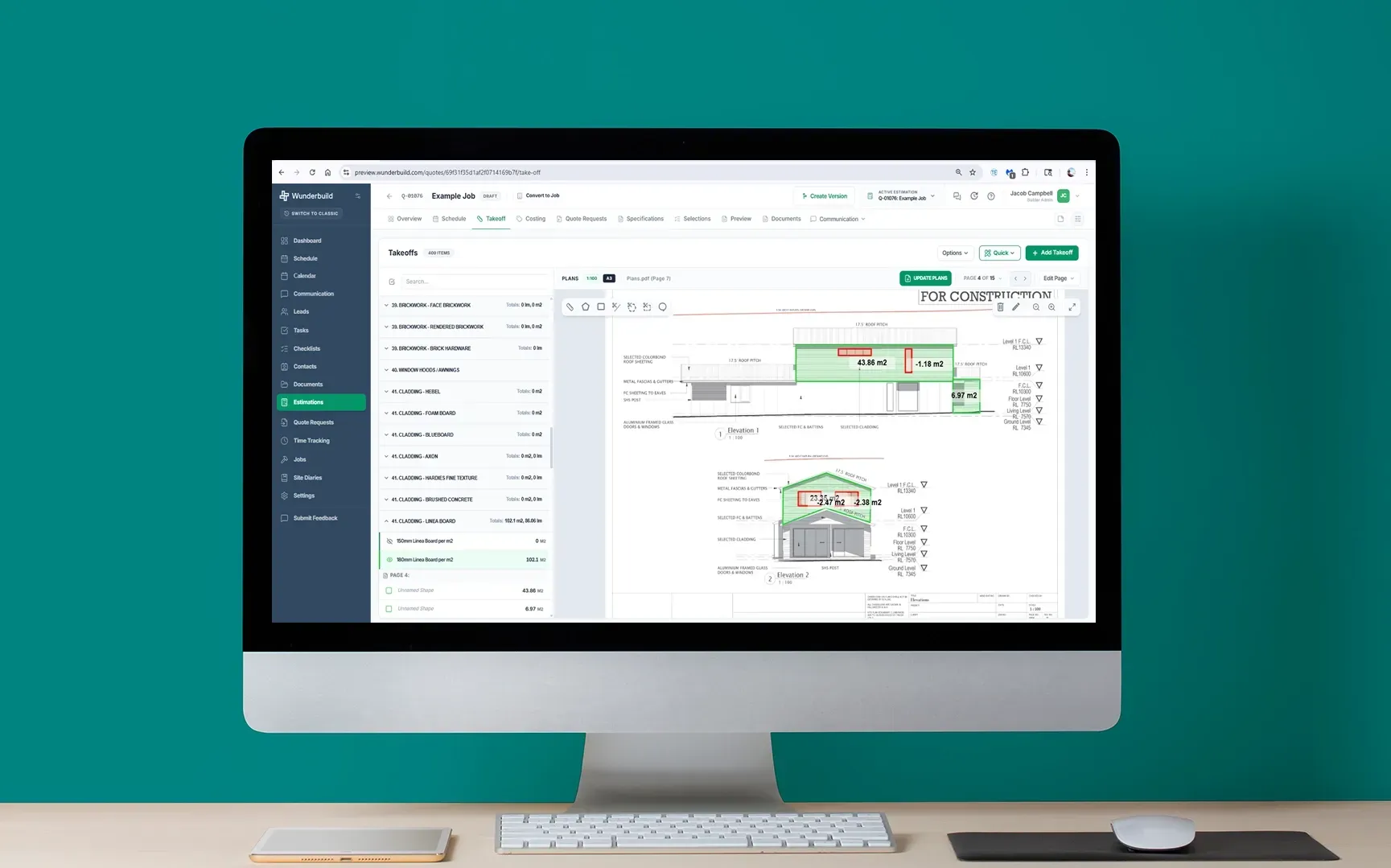
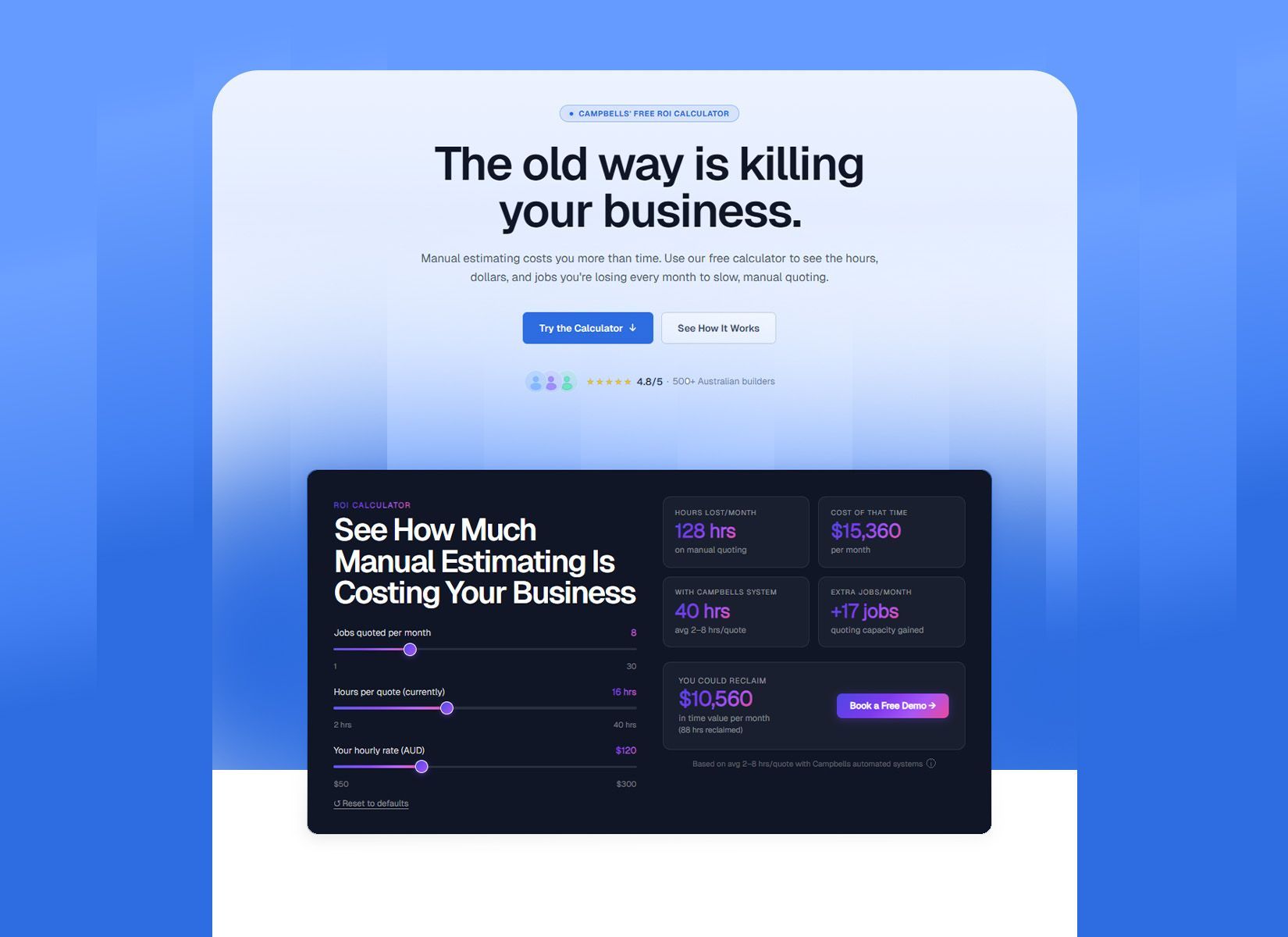



Profit on most Australian builds is determined before site works start. Every decision made — or skipped — in the pre-construction phase compounds through the project. Builders who treat pre-construction as a structured, disciplined phase consistently deliver better margins than builders who treat it as a sprint to get to site. This article lays out a five-phase pre-construction workflow used by some of the most profitable mid-market residential and commercial builders in Australia. It's designed to professionalise what is often the most chaotic phase of a build. Why Pre-Construction Is the Highest-Leverage Phase of Any Build There's a hierarchy of cost-control leverage in construction, and it inverts as the project progresses: Lead qualification: every dollar of estimating effort spent on a job you shouldn't have quoted is wasted Feasibility and design: decisions here lock in 60–70% of project cost Estimating: where margin is priced in or out Contract: where margin is protected or exposed Site works: where margin is delivered or eroded — but the ceiling has already been set By the time the first concrete pour happens, the maximum margin you can earn on the project has been determined. Site execution can lose margin from there, but it can't add to what wasn't priced in. This is why the most profitable builders aren't necessarily the best site managers. They're the best pre-construction operators. The Five Phases of a Strong Pre-Construction Workflow Each phase has defined inputs, defined outputs, and defined ownership. The goal isn't bureaucracy — it's predictability. Phase 1: Lead Qualification Most Australian builders quote too many jobs. Quoting is expensive — typically 1–3% of the contract value in time and resource cost. Quoting jobs you shouldn't have quoted is a major source of estimating overhead, and it dilutes attention from the jobs that matter. What Lead Qualification Looks Like Before any estimating begins, the lead is assessed against a defined qualification framework: Project type fit: does this match what we do well? Geographic fit: is this within our operational radius? Budget reality: does the client's budget align with the scope they're describing? Decision-maker access: are we talking to someone who can actually award the contract? Timeline reality: is the project ready, or are we quoting a wishlist? Competitive context: how many other builders are quoting, and what's our likely win probability? The Output: Go / No-Go Decision Every lead either passes qualification and moves to feasibility, or fails and gets a structured no-thank-you (which often becomes a referral). Builders who implement this discipline typically reduce quote volume by 30–40% while increasing win rate and margin per quoted job. Phase 2: Feasibility For qualified leads above a defined complexity threshold, a feasibility step happens before full estimating begins. Feasibility is a lightweight assessment that answers: "Can this project actually be built within the client's budget and timeline expectations?" What Feasibility Include es Site visit and constraint review (access, services, soil, vegetation, neighbours) High-level cost estimate (square metre rate or first-principles benchmark) Identification of major cost drivers and risks Programme overview (typical duration for a project of this type) Honest conversation with the client about budget vs. scope Why Feasibility Saves Money Feasibility kills bad jobs early. A two-hour feasibility review can prevent a 40-hour estimating effort on a project that was never going to proceed at the client's stated budget. It also positions you as a strategic partner rather than just another quoter — which often becomes the differentiator that wins the eventual contract. Phase 3: Esti mating This is the most-discussed phase but it's only one of five. The estimating process should follow your documented take-off and pricing protocols, with appropriate review and quality control. The output is a quote that genuinely reflects the cost of delivering the project to the standards specified, plus your overhead and profit. What Strong Estimating Looks Like in Pre-Con Documented take-off process (see the take-off process article) Explicit scope-of-works with inclusions/exclusions schedule Subcontractor pricing in writing for trades above threshold Updated rate library reflecting current market conditions Two-pass review before quote submission Documented assumptions, allowances, and PC sums Phase 4: Contract The contract phase is where pre-construction discipline either pays off or unravels. Many builders rush this phase because the client wants to start. That's a mistake. The cost of three days of additional contract clarity is usually less than the cost of one disputed variation later. Critical Contract Activities Contract type selection (HIA, Master Builders, custom) appropriate to the project Special conditions reviewed and customised for project-specific risks Inclusions/exclusions schedule attached as a contract appendix Programme attached and agreed Variation procedure documented and explicitly agreed Payment schedule aligned with construction milestones Insurance and warranty obligations confirmed Domestic Building Insurance (where applicable) arranged Phase 5: Handover to Construction The most overlooked phase. Most pre-construction problems that surface during the build trace back to a poor handover from the estimating team to the project management/site team. Information sits in the estimator's head and never makes it into a usable form for the people building the job. What a Good Handover Looks Like A formal handover meeting between the estimator and the project manager covers: Walkthrough of the estimate by trade, including key assumptions Review of all PC sums and provisional items, with action plans for resolution Subcontractor list and pricing context Programme and any commitments made to the client about timeline Known risks and how they were priced Margin position and where it's protected vs. exposed The output is a project brief document that becomes the operating manual for the build. The estimator's knowledge transfers to the team, instead of evaporating after the contract is signed. Common Pre-Construction Breakdowns

A builder we work with quoted a renovation at $480,000. The job ran over by $34,000. When we audited what went wrong, the answer wasn't bad pricing — every line item that was priced was priced accurately. The problem was that 11 line items weren't priced at all because they weren't in the scope of works. None of them were huge individually. Together they were a 7% margin loss the builder couldn't recover.

Ask ten Australian builders how they price a new home and you'll get ten slightly different answers. But underneath all of them, two fundamental methods are at work: first principles estimating, which builds the cost from the ground up, and square metre rate estimating, which applies a price-per-square-metre based on past experience or industry benchmarks.

A builder we know recently won a $1.2M two-storey custom home. Six weeks into site works, his project manager flagged a problem: the structural steel package had been priced off the wrong drawing revision. The shortfall was $42,000. The job was already locked in at a fixed price. That single estimating error wiped out more than half the project's projected margin.
The body content of your post goes here. To edit this text, click on it and delete this default text and start typing your own or paste your own from a different source.

In high-end residential construction, choosing the right contract structure is critical to the success of a project. As an estimator working with over 100 builders across Australia, particularly in the architectural and custom home space, I’ve seen how contract models directly impact outcomes for both builders and clients.

An inaccurate estimate is one of the most expensive documents in construction. Under-quote a job and you're eating the difference for six months. Over-quote it and the client walks to someone cheaper — often someone who's also under-quoted and will hit them with variations later. Either way, the loss is real and it compounds.

A Comprehensive Guide to Unraveling Estimators Crucial Role

Hiring the right estimator is one of the higher-leverage decisions a builder makes. Get it right and your quotes go out faster, your margins hold, and your jobs don't blow out halfway through. Get it wrong and you'll spend the next twelve months either re-pricing work or watching profit walk out the door.

Estimating is where a lot of residential builds are won or lost. Slow quotes lose leads. Sloppy quotes lose margin. And most builders I speak to know their estimating could be tighter — they just don't have the time to fix it while they're buried in the next round of quotes.