
5 Key Factors to Consider When Hiring an Construction Estimator
Jacob Campbell • September 19, 2026


Hiring the right estimator is one of the higher-leverage decisions a builder makes. Get it right and your quotes go out faster, your margins hold, and your jobs don't blow out halfway through. Get it wrong and you'll spend the next twelve months either re-pricing work or watching profit walk out the door.
Whether you're bringing an estimator in-house or engaging an external firm, these are the five things worth weighing before you commit.
1. Experience with jobs like yours
Estimating a two-storey custom home isn't the same as estimating a duplex, a knockdown-rebuild, or a small commercial fit-out. Ask the estimator what they actually spend most of their time pricing. A great estimator working outside their lane will still be slower and less accurate than a competent one working in it. Look at their portfolio, ask for specifics, and make sure their day-to-day looks like the work you're handing them.
2. Fluent in the tools you use
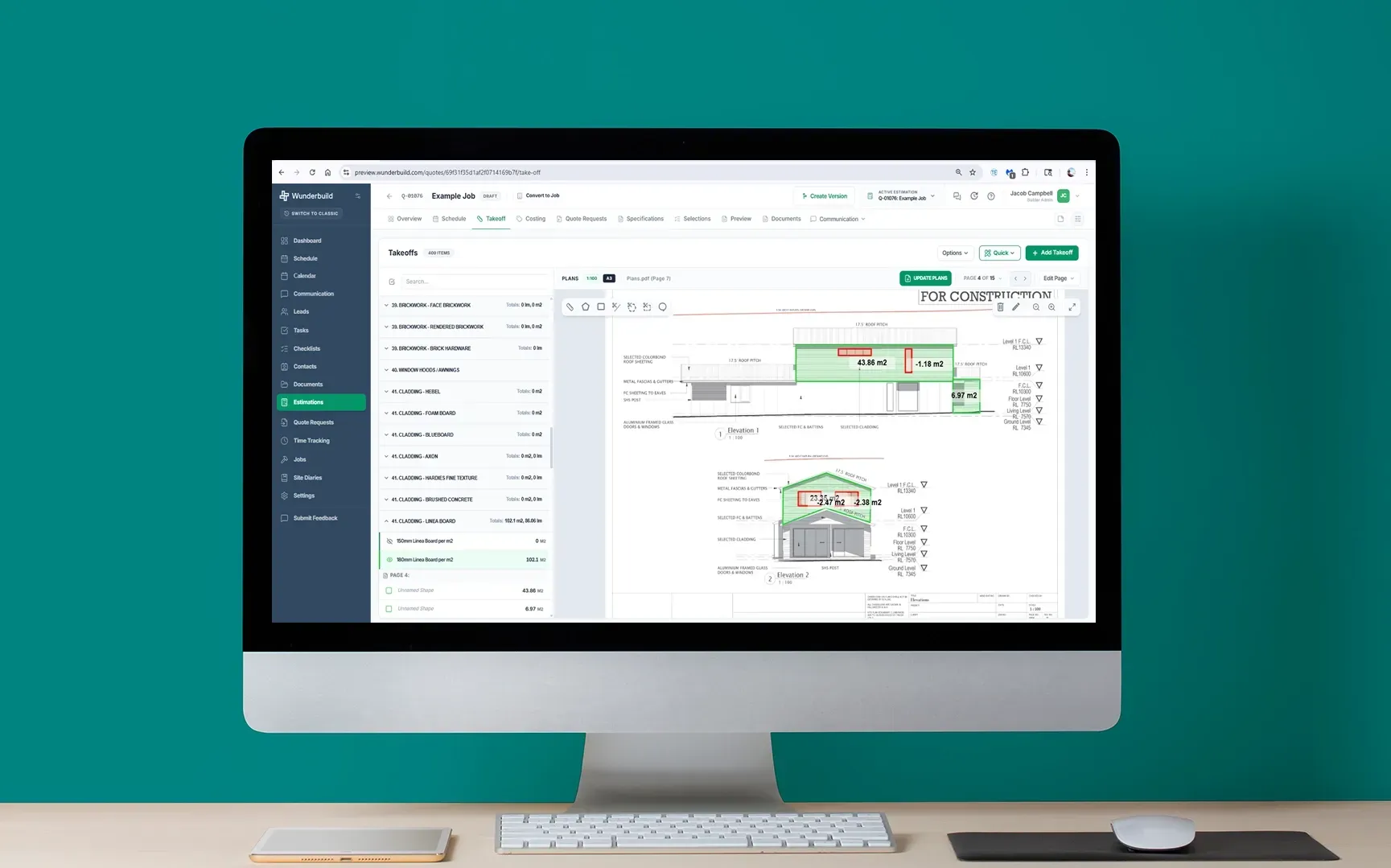
Modern estimating happens on a platform — Wunderbuild, Buildxact, or similar — not in a spreadsheet. An estimator who's fluent in the software you run (or willing to move to it) will slot in immediately. One who isn't will cost you time in setup, training, and workarounds. Ask which platforms they've actively used and for how long, not just which ones they've heard of.
3. Genuinely detail-oriented
Estimating rewards the sort of person who reads the specification twice, notices the drawings don't match, and flags it before the quote goes out. That's a personality trait as much as a skill. In a conversation, you can usually tell within ten minutes — do they ask sharp, specific questions about your process, or do they nod along? The ones who dig in are the ones you want.
4. Clear communicators, in writing and on a call
An estimator sits between you, the client, and often the trades. If they can't explain why a figure landed where it did, or write a clean scope of inclusions and exclusions, that friction lands on your desk. Ask to see a sample quote or scope document. The way they present numbers to a client tells you more than any conversation about their communication style.
5. Steady when the job shifts
Plans change. Suppliers change prices. Clients change their minds. A good estimator doesn't panic when a variation comes in — they recalculate, flag the impact clearly, and keep the project moving. Ask how they handle a mid-project scope change. If the answer is a shrug or a workflow that sounds fragile, that's your signal.
Choosing the right estimator isn't about ticking every box on the list — it's about weighing which of these factors matter most for your business and hiring against that. A high-volume project home builder needs different strengths in an estimator than a bespoke custom builder does.
If you'd rather skip the hiring process altogether, that's what we do. At Campbells Estimating, based in Cleveland, we run done-for-you estimating for residential builders across Australia — and if you'd prefer to sharpen your in-house team instead, our subscription template packs for Wunderbuild and Buildxact give them the same head start.
Ready to quote faster?
Book a free 15-minute call with our team and we'll show you how Campbells fits your workflow.
Book a Free Call
Get articles, insights, and lessons straight to your inbox.
No spam, ever. Unsubscribe anytime.