
The True Cost of Estimating Errors in Australian Construction (And How to Avoid Them)
Jacob Campbell • September 20, 2026
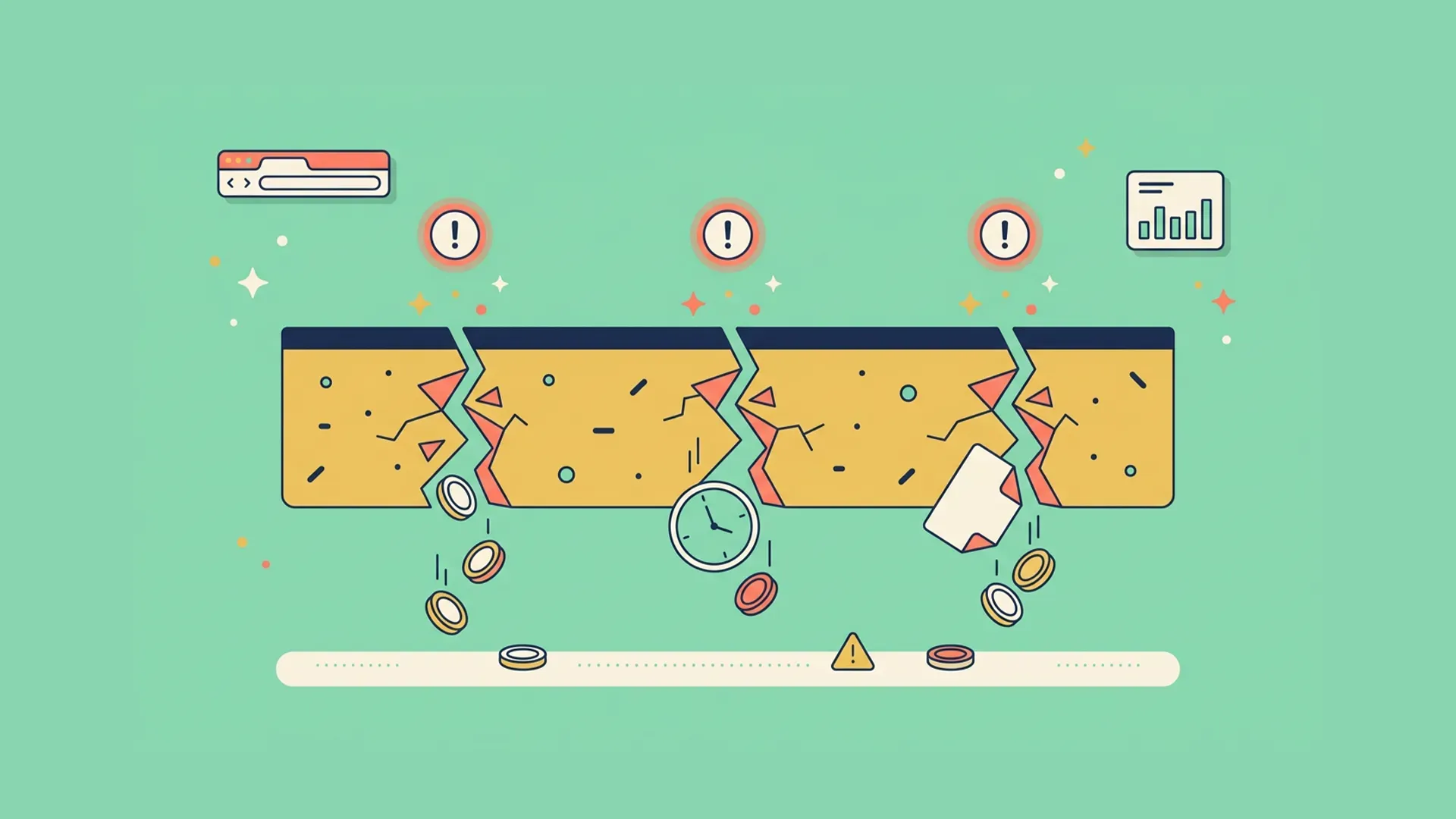
A builder we know recently won a $1.2M two-storey custom home. Six weeks into site works, his project manager flagged a problem: the structural steel package had been priced off the wrong drawing revision. The shortfall was $42,000. The job was already locked in at a fixed price. That single estimating error wiped out more than half the project's projected margin.
Stories like this aren't outliers. They're the silent killer of Australian builder profitability — and almost every builder has one. The difference between builders who scale and builders who stagnate isn't talent or work ethic. It's whether they treat estimating errors as bad luck or as a systems failure.
This article breaks down the seven categories of estimating errors that erode margin in Australian builds, what each one typically costs, the root causes that create them, and the systems that prevent them. It's written for builders who are tired of finding out about estimating mistakes after the contract is signed.
Why Estimating Errors Are Different From Other Mistakes
Most operational mistakes are recoverable. A scheduling error costs you a few days. A trade dispute costs you a tough conversation. An estimating error, once locked into a fixed-price contract, is almost always permanent margin loss.
That asymmetry is what makes estimating the highest-leverage function in any building business. A 2% improvement in estimating accuracy on a $5M annual turnover is $100,000 of recovered margin. There is no other operational lever in a builder's business that returns that kind of result for that kind of investment.
Yet most Australian builders treat estimating as a task rather than a system. They run it from spreadsheets that have evolved over years. They rely on memory for rates. They don't audit estimates after the job closes. And they wonder why margins keep slipping.
The Seven Categories of Estimating Errors (And What They Actually Cost)
Estimating errors aren't random. They fall into seven recognisable categories, each with its own root cause and typical margin impact. Understanding which categories your business is most exposed to is the first step toward eliminating them.
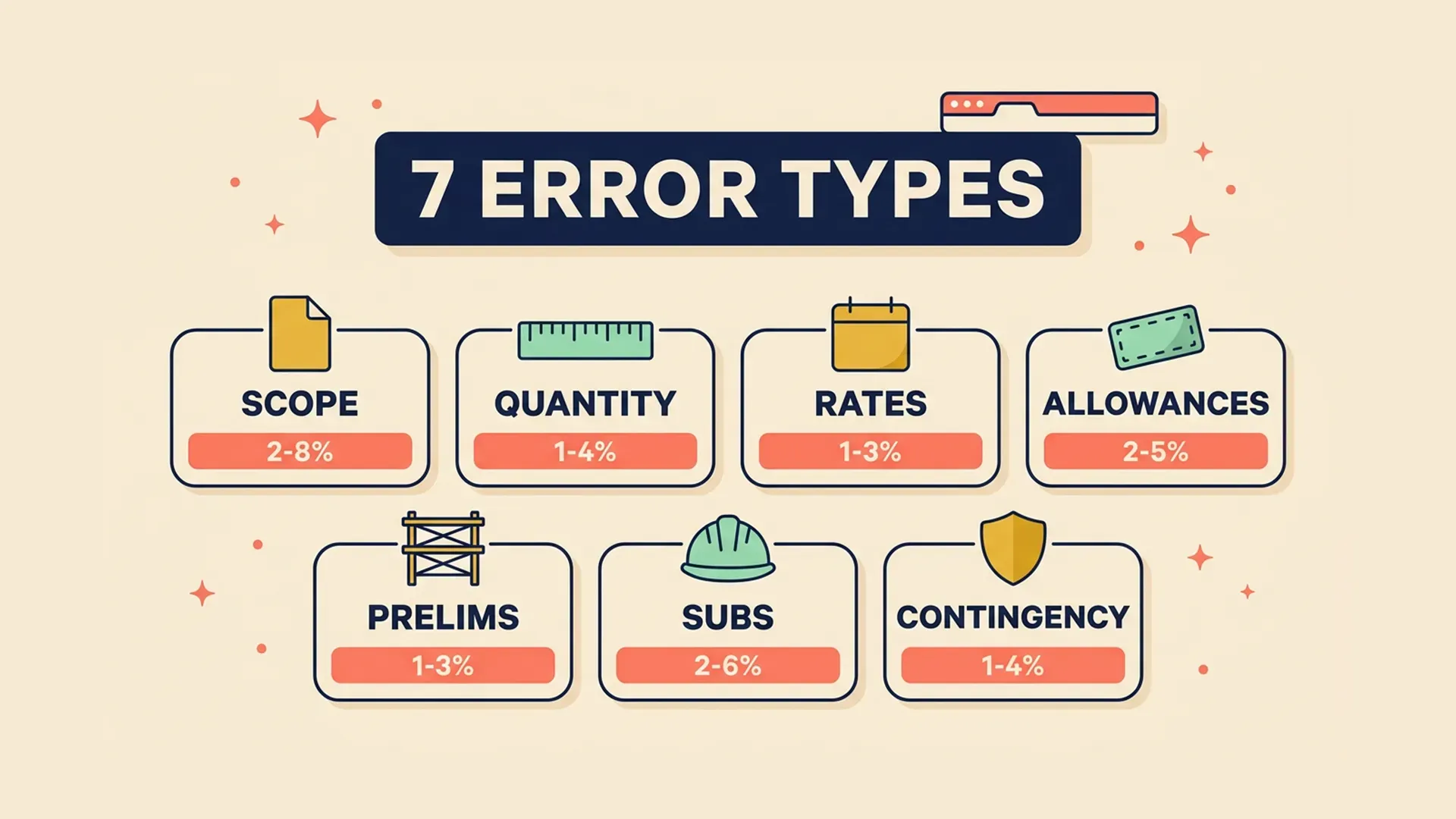
1. Scope Omissions
The most expensive errors in Australian construction. Scope omissions happen when an estimator prices what's drawn rather than what's actually required to deliver the project. Common culprits include external works, site cleaning, allowances for protected vegetation, temporary services, and the gap between architectural and engineering documents.
The fix isn't more detailed take-offs. It's a structured scope review process — a formal step that happens after take-off but before pricing finalises, where a second estimator or the lead builder reviews scope inclusions and exclusions against a master checklist.
2. Quantity Miscalculations
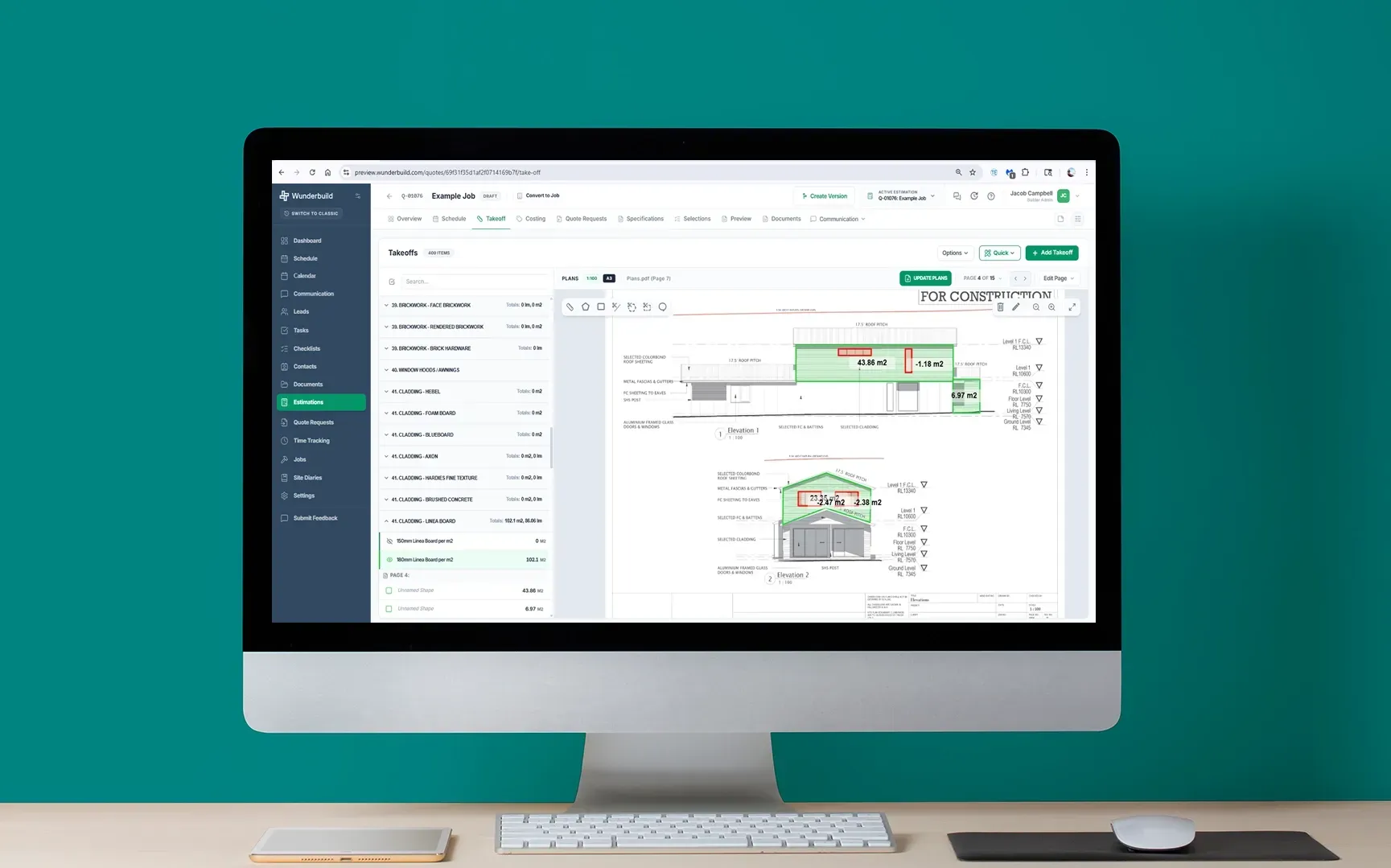
Manual take-offs — particularly on PDFs marked up in Bluebeam or printed plans — are where quantity errors hide. They compound: a 5% error in concrete quantity becomes a 5% error in steel reinforcement, formwork, labour, and pump hire. One mistake, multiple line items affected.
Digital take-off platforms reduce these errors by 60–80% in most environments, not because the software is smarter, but because it forces consistency and creates an audit trail. The estimator can see exactly what was measured and why.
3. Outdated Rates
Material price volatility post-2022 exposed every builder relying on rate libraries that hadn't been refreshed in 12+ months. Timber, steel, and electrical components moved 15–40% in some categories. Builders pricing off old rates were quoting at a loss before the job even started.
The systems-level fix is a quarterly rate review — a recurring calendar event where supplier rates are pulled, compared against your library, and updated. This isn't optional in the current market. It's a survival discipline.
4. Allowance Abuse
PC sums and provisional sums exist for legitimate reasons — when a selection genuinely hasn't been made or a scope item genuinely can't be priced. They become dangerous when estimators use them to paper over uncertainty rather than do the work to price properly.
The discipline: every PC sum and provisional item gets reviewed by the project lead before quote submission. If it can be priced, it should be. If it can't, it should be flagged to the client with clear assumptions and a process for resolution.
5. Missed Prelims
Site establishment, scaffolding, traffic management, temporary fencing, dilapidation reports, site sheds, waste removal — prelims add up to 4–8% of contract value on most builds, and they're routinely under-priced because builders treat them as overhead absorbed in the margin rather than as line items priced per job.
On a tight site with restricted access, prelims can hit 12% or more. Generic prelim rates lifted from a previous job are how this category becomes a margin killer.
6. Subcontractor Assumption Errors
The phrase "I know what the sparkie usually charges" has cost Australian builders more money than almost any other estimating habit. Subcontractor pricing should be obtained per project, in writing, against a defined scope. Memory-based pricing is a margin tax.
The systems fix: a documented sub-pricing protocol that requires written quotes for any trade above a defined threshold (commonly $5,000 or 1% of contract value, whichever is lower).
7. Contingency Mismanagement
Contingency exists to absorb the unforeseen. It does not exist to absorb known risks the estimator didn't price properly. When contingency is used to plug an estimating hole at quote stage, you've started the job with no buffer — which means the first variation, the first weather event, or the first scope shift comes directly out of margin.
Why These Errors Compound
A single estimating error in one of the seven categories above is usually survivable. Two or three combined on the same job is not. And because all seven trace back to the same systems failures — rushed processes, undocumented protocols, no QA layer, no review cadence — builders who experience one usually experience several on the same project.
This is why piecemeal fixes don't work. Adding a scope checklist without addressing rate currency, or upgrading take-off software without changing review processes, plugs one leak while the others continue draining margin.

How to Audit Your Last Three Estimates
Before you change anything, find out where you actually are. Pull your last three completed projects and run this audit:
1. Compare estimated vs. actual costs in each major category (substructure, structure, services, finishes, external works, prelims). Flag any category where the variance exceeds 5%.
2. Identify whether each variance was caused by a quoting error, a scope variation, or genuine site conditions. Be honest. "Variations" that should have been caught at scope stage are quoting errors.
3. Categorise each quoting error against the seven types above. You'll usually see a pattern — most builders have two or three categories that account for most of their losses.
4. For the top two categories, document the specific systems failure that allowed the error through (no checklist, no review step, outdated rates, etc.).
5. Build the system that prevents that specific failure. Don't try to fix everything. Fix the biggest leak first.
The Systems That Actually Prevent Estimating Errors
The builders who consistently hit margin targets aren't smarter or more careful. They've built four systems that catch errors before quotes go out the door.
System 1: A Living Cost Library
Not a spreadsheet. A structured database of materials, labour rates, and trade rates that's updated on a defined cadence (quarterly minimum, monthly for volatile categories). Modern estimating platforms like Wunderbuild and Buildxact host this natively. The discipline isn't in the tool — it's in the update cadence.
System 2: A Two-Pass Estimating Process
Every estimate goes through two passes before submission. Pass one: take-off and pricing by the lead estimator. Pass two: review by a second person against a structured checklist covering scope, quantities, rates, and prelims. The reviewer doesn't re-price the job — they pressure-test it.
System 3: A Post-Job Variance Review
Within 30 days of practical completion, every project gets a variance review comparing estimated vs. actual costs. Errors caught here become inputs into the cost library and the review checklist for future estimates. Without this loop, the same errors repeat indefinitely.
System 4: A Documented Estimating SOP
The four steps above only work if they're written down. An estimating SOP — even a basic one — is the difference between a process that survives staff turnover and a process that lives in one person's head and dies when they leave.
When Estimating Errors Signal a Bigger Problem
Sometimes errors aren't a systems problem — they're a capacity problem. If your estimator is producing 12+ quotes a month while also managing live projects, errors aren't a discipline failure. They're the predictable result of overload.
Three signals that you've outgrown your current estimating capacity:
• Quote turnaround times are creeping up, even when win rates aren't
• Estimators are working evenings and weekends consistently
• Errors are appearing in categories that didn't have errors 12 months ago
When this is happening, the answer isn't more discipline. It's more capacity — through hiring, outsourcing, or systemising. Pushing harder on a maxed-out estimating function just creates more errors.
The Bottom Line for Australian Builders
Estimating errors aren't random and they aren't unavoidable. They're the predictable output of estimating systems that haven't kept pace with the size and complexity of the business running them. Every error category above has a known cause and a known fix.
The builders who scale profitably aren't lucky. They've decided that estimating accuracy is a system, not a skill — and they've invested accordingly. The cost of getting this right is meaningful. The cost of not getting it right shows up in every fixed-price contract you sign.
Most builders don't lose money because they're bad estimators. They lose money because their estimating systems were built for a smaller version of their business.
Want to know where your estimating system is leaking margin? Book a free Estimating Systems Review — we'll audit your last three estimates against the seven error categories above and show you exactly which systems to fix first.
Ready to quote faster?
Book a free 15-minute call with our team and we'll show you how Campbells fits your workflow.
Book a Free Call
Get articles, insights, and lessons straight to your inbox.
No spam, ever. Unsubscribe anytime.